Does a Dehumidifier Get Rid of Basement Mold?
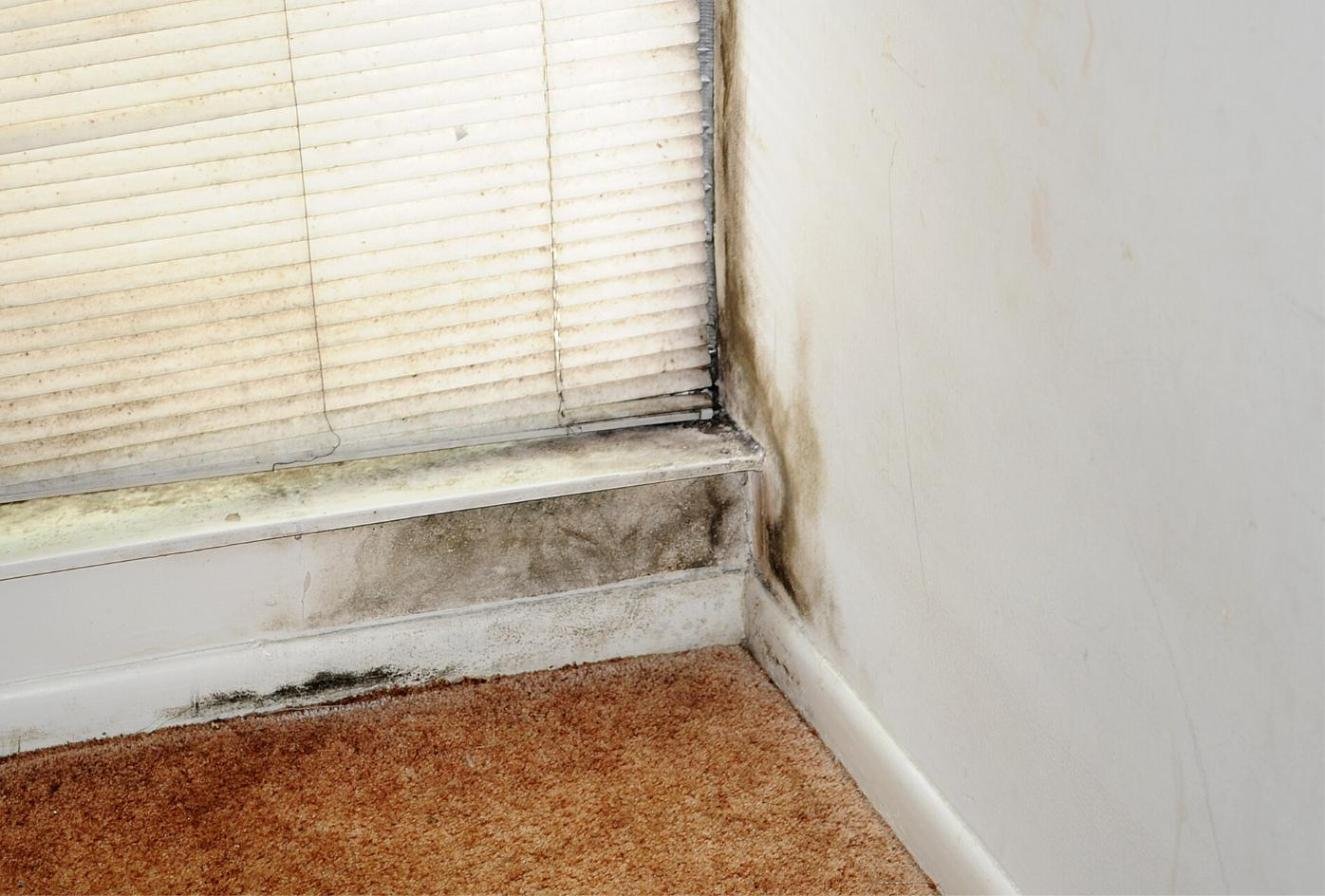
Does a dehumidifier get rid of mold? No. A dehumidifier lowers the moisture in the air, which stops mold from growing and spreading, but it does not kill the mold or remove it. The growth already on your walls, framing or belongings stays there, goes dormant, and starts up again when the humidity returns.
What a dehumidifier actually does
A dehumidifier pulls room air across a cold coil. Water vapour condenses on the coil and drips into a bucket or down a hose. The air leaves drier. That is the whole job.
Drier air helps in real ways. Materials like wood, drywall and cardboard give up some of their moisture to dry air, so surfaces that were damp enough to grow mold drop below that point. New growth slows and then stops. The musty smell often fades, because the smell comes from mold that is actively growing.
The machine has no effect on mold that already exists. It does not filter spores out of the air in any meaningful way, and it does not clean a surface.
Why dry mold is still a problem
Mold that dries out does not die off and disappear. It goes dormant. The spores can stay viable for a long time, and they wake up when moisture comes back, whether that is next summer or the next time the bucket fills and the machine shuts off.
Dormant and even dead mold can still bother people. The spores and fragments that trigger allergies and irritate airways do not need to be alive to do it. Dry growth is also brittle, so it sheds particles more easily when it is bumped or brushed. That is why Health Canada's advice is to remove indoor mold, and drying it in place does not meet that.
People who have asthma, allergies or a weakened immune system, and infants and seniors, are more likely to react. Health questions belong with a doctor.
When a dehumidifier is the right tool
- Prevention. In a basement with no mold and no leaks, holding the air at 45% to 50% through the summer is the best thing you can do.
- After cleanup. Once mold has been removed and the cause fixed, a dehumidifier keeps conditions from sliding back.
- Buying time. If you have found mold and cannot deal with it this week, drying the air slows it down. Do not point a fan at the growth, since that spreads spores.
- Seasonal dampness. A basement that is only damp in July and August, from humid outdoor air, is exactly what the machine is built for.
When a dehumidifier will not be enough
- Liquid water. Seepage through the foundation, a leaking pipe or a window well that floods adds water faster than any household unit can remove it. Fix the leak.
- Hidden cavities. The machine dries room air. It does little for the space behind drywall, under carpet pad or inside insulation, where air does not circulate.
- After a flood. Soaked materials need commercial drying equipment and often removal. A household unit running in a flooded basement is too small and too slow, and mold can start within a couple of days on wet drywall.
- Existing growth. Anything already moldy needs to be cleaned or removed, whatever the humidity reads afterward.
What does get rid of basement mold
Getting rid of mold is done in a set order, and the dehumidifier comes last.
- Find and stop the water. That may be a plumbing repair, an outside drainage fix or simply humidity control.
- Remove the mold. Hard surfaces like concrete, metal and solid wood are cleaned. Porous materials that have mold in them, such as drywall, insulation, carpet pad and cardboard, are taken out.
- Dry the structure. Framing should read under 16% wood moisture content before walls are closed.
- Keep it dry. This is where the dehumidifier does its work, for as long as you own the house.
Small patches on hard surfaces can be cleaned by a homeowner with detergent and water, gloves, eye protection and an N95 mask. Health Canada suggests getting professional help for larger areas or for mold that keeps returning. Larger jobs are done under containment with negative air through HEPA filtration so the cleanup does not spread spores through the house.
What about air purifiers?
The same logic applies. A HEPA air purifier captures spores that pass through it, which can lower what is floating in a room. It does nothing about the colony on the wall that keeps producing them. It is a reasonable extra in a bedroom and a poor substitute for removal.
If you already own a dehumidifier, keep running it and look at what it has been hiding. Check the bottom of outside walls, the backs of furniture and anything stored in cardboard. If you find growth, deal with that material directly, then let the machine keep the basement dry.
Common questions
Will mold die if humidity drops below 50%?
It stops growing and goes dormant, but it is not reliably killed and it is not removed. It can restart when moisture returns and can still trigger allergies while dry.
How long does a dehumidifier take to dry out a damp basement?
Room air usually comes down within a few days. Damp materials like framing and concrete take longer, often weeks with a household unit, and wet cavities may not dry at all without being opened.
Where should a dehumidifier go in a basement?
Put it in the open, away from walls so air can flow through it, and near a floor drain so it can drain by hose. Leave interior doors open so it can reach the whole level.
Send photos, get a firm quote in 2 hours
Three photos from your phone is enough for most jobs. No obligation.