Mold on Basement Drywall: Cut It Out or Clean It?
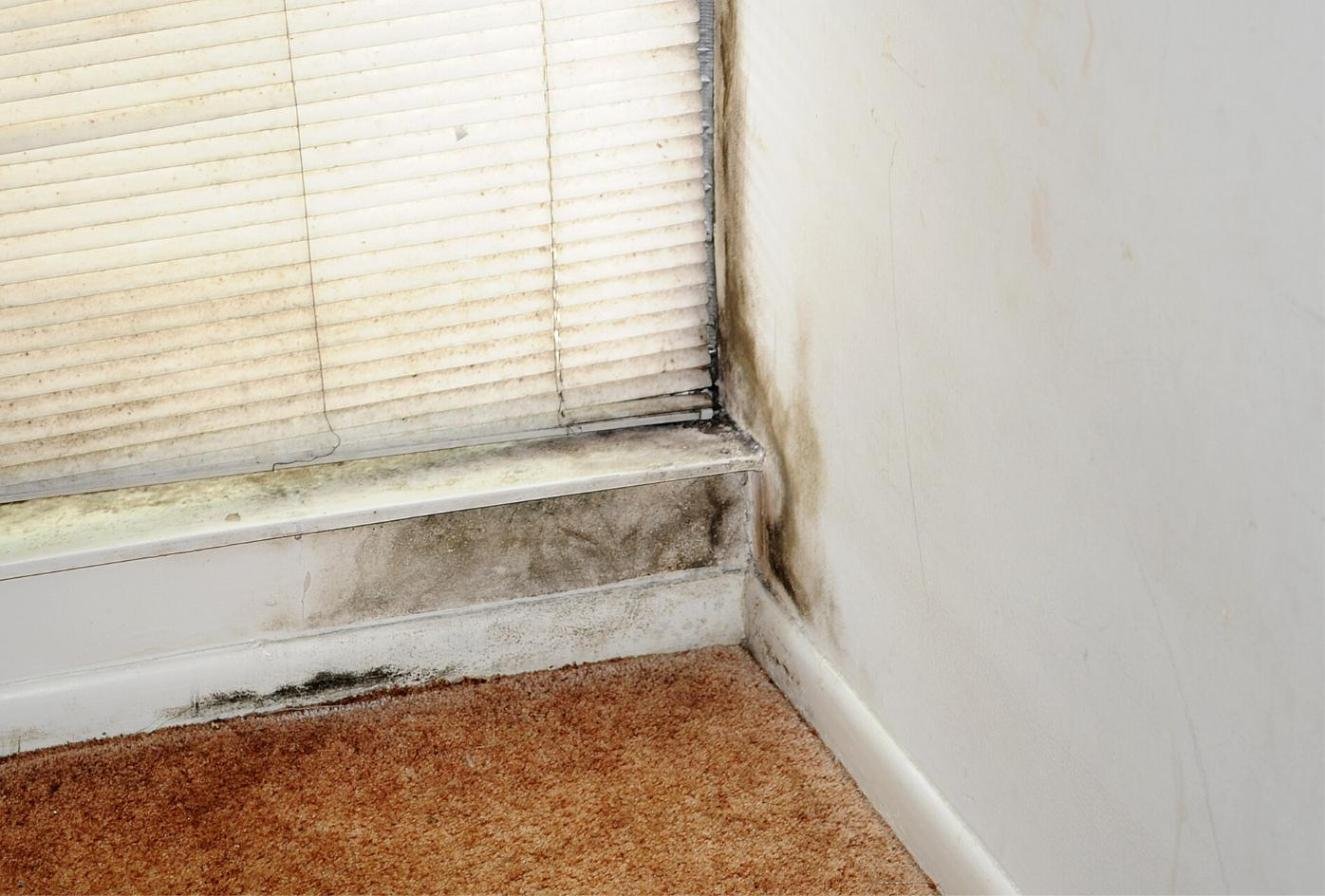
Mold on basement drywall usually has to be cut out. Drywall is gypsum wrapped in paper, and mold grows into the paper and the core where a cloth cannot reach it. Cleaning only works when the growth is small, sits on the painted surface, and the board behind it is dry and solid.
Why drywall is such good food for mold
The paper facing on drywall is processed wood fibre. Once it gets damp it is about the easiest meal in the house for mold. The gypsum core soaks up water like a sponge and holds it for a long time, so the paper stays wet from the inside. There is paper on the back of the sheet too, facing the wall cavity. In a basement, that back face is often where the growth starts.
This is the main reason wiping fails. You clean the front, it looks fine for a few weeks, and the stain comes back through the paint.
When cleaning mold on basement drywall is enough
Surface cleaning is reasonable when all of these are true.
- The patch is small. Health Canada treats patches under about one square metre as something a homeowner can clean.
- The cause was moisture in the room air, like condensation in a corner behind furniture, and no water came through or down the wall.
- The drywall is hard when you press it. No soft spots, swelling, crumbling or bubbled paint.
- The paint film is intact, so the growth is sitting on paint and has not reached the paper.
To clean it, wear gloves, eye protection and an N95 mask. Wipe with a cloth dampened with water and a little dish soap, then dry the surface right away. Do not soak the wall. Bleach is not needed, and it adds water to a material that is already struggling. If the spot returns, the growth is in the board and it needs to come out.
When the drywall has to be cut out
Remove the drywall when any of these apply.
- The board got wet from a leak, a flood or seepage, even if it has since dried.
- The drywall is soft, swollen, stained brown or crumbling at the bottom edge.
- The mold comes back after cleaning.
- There is a musty smell from the wall with little showing on the surface. That points to growth on the back.
- The affected area is larger than a few small patches.
Whatever you see on the room side, expect more on the cavity side. It is common to open a wall for a patch the size of a dinner plate and find the back of the sheet covered for several feet.
How far to cut
The usual practice is to cut at least 30 cm past the last visible growth or water staining in every direction, then look at the back of the piece that came off and the edge that remains. If the back of the remaining drywall is clean and the framing reads dry, stop. If not, keep going.
After a flood, drywall is often cut in a straight line two or four feet off the floor. That height clears the wet zone, and it lines up with standard sheet sizes so the repair is simpler. Cut along the middle of a stud where you can, so the new piece has something to fasten to.
Doing the removal without spreading it
Cutting moldy drywall throws spores and dust into the air. On a small job you can limit that with a few habits.
- Turn off the furnace fan and cover nearby supply and return vents.
- Close the door to the room and clear out or cover the contents.
- Lightly mist the surface so dust stays down. Score and snap the drywall with a knife instead of using a power saw.
- Bag the pieces in the room, tie the bags and carry them straight outside.
- Vacuum the area with a HEPA vacuum and wipe hard surfaces with a damp cloth. A regular shop vacuum blows fine spores back out.
- Do not run a fan across the open wall until the debris is gone.
Larger areas call for full containment under negative air, which is how we handle them.
What to do before the wall is closed again
The framing and the concrete behind the wall have to be clean and dry before new board goes up. We dry until framing reads under 16% wood moisture content. Closing a wall over damp studs is how the same wall ends up moldy twice.
The water source has to be fixed too. When the wall is rebuilt, ask your contractor about mold-resistant or paperless board for the basement, and about leaving a small gap between the bottom of the drywall and the slab so the board cannot wick water from the floor. We do not do the rebuild ourselves. We refer it to local contractors once the area is cleared.
Skip stain-blocking primer as a fix. Painting over mold seals in the stain for a while and leaves the growth and the moisture behind it. If you are unsure which side of the line your wall is on, press along the bottom edge, look for staining at the baseboard, and take photos before you touch it.
Common questions
Can I just paint over mold on drywall with mold-resistant paint?
No. Mold-resistant paint slows new growth on a clean surface. Over existing mold it peels or stains through, and the board keeps deteriorating underneath.
Is mold-resistant drywall mold proof?
No. It resists growth better than standard board, but dust and paint on its surface can still grow mold if the wall stays damp. Keeping the wall dry is what prevents mold.
Do the wood studs behind moldy drywall need replacing?
Usually not. Solid wood can normally be cleaned, dried and kept. Studs or bottom plates that are soft or rotted are the exception.
Send photos, get a firm quote in 2 hours
Three photos from your phone is enough for most jobs. No obligation.