Finished vs Unfinished Basements: Which Gets More Mold?
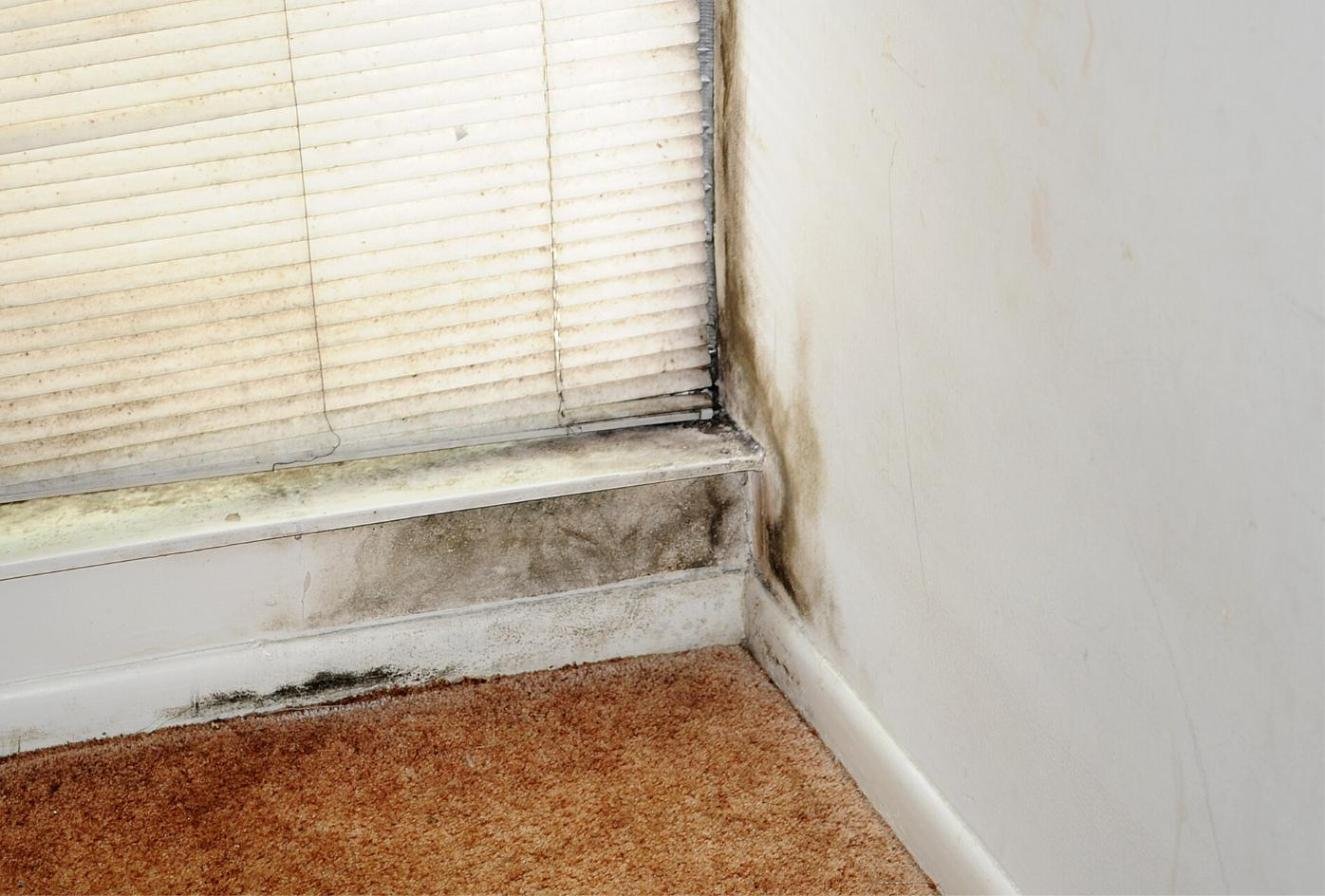
Finished basements get more mold than unfinished ones. Finished basement mold problems come from two things: finishing adds materials that mold eats, such as drywall, wood framing and carpet, and it covers the concrete so you cannot see dampness until it has been there for a while. An unfinished basement can still grow mold, but there is less to feed it and it is in plain sight.
Why finished basement mold problems are more common
Bare concrete gives mold very little to work with. A finished basement is a different environment.
- More food. Drywall paper, wood studs, baseboard, carpet, underpad and laminate are all organic. Every one of them will grow mold if it stays damp.
- Hidden surfaces. A foundation wall behind drywall can be wet for a season before any sign reaches the room side.
- Trapped moisture. Concrete that used to dry freely into the open basement is now covered. Moisture that comes through it stays in the wall and under the floor.
- Still air. Closets, storage rooms and the space behind furniture get little air movement, so they stay cooler and more humid than the main room.
- More plumbing. Basement bathrooms, wet bars and laundry rooms add supply lines, drains and shower walls, and each one is a possible leak inside a finished wall.
The cost follows from this. In an unfinished basement, mold is cleaned off concrete and framing. In a finished one, the finishes have to come out first and be rebuilt afterward.
Where mold shows up in a finished basement
- The bottom foot of outside walls, at the drywall edge and behind the baseboard.
- Below and beside basement windows, where window wells overflow or frames leak.
- The wall behind a shower or tub and the floor around a toilet.
- Closets on outside walls and the space under the stairs.
- Under carpet along the perimeter of the room.
- Around the edges of the furnace or utility room, where finished walls meet the unfinished part.
- Ceiling tiles or drywall below a kitchen or bathroom on the main floor.
Where mold shows up in an unfinished basement
Unfinished does not mean immune. The usual spots are different.
- Cardboard boxes and stored belongings sitting on the floor or against the walls.
- The floor joists and subfloor overhead, after a humid summer or a leak from above.
- The wood rim at the top of the foundation wall, mostly near hose bibs and vent pipes.
- Old wooden shelving, workbenches and partition walls resting on the slab.
- Painted foundation walls where the paint has blistered.
- The cold room under the porch.
The advantage is that you can see all of it with a flashlight in ten minutes, and you can see water stains on the concrete that tell you where the moisture comes from.
What to check before you finish a basement
Most mold in finished basements traces back to a moisture problem that was there before the studs went up. A patient homeowner can avoid it.
- Watch the bare basement through a full spring and summer. Look at the walls and the floor edge after heavy rain and during snowmelt.
- Look for white salt deposits, damp patches, peeling paint and rust at the bottom of steel posts. Each one marks a place where water gets in.
- Fix the outside first: eavestroughs, downspout extensions, grading and window wells.
- Have cracks and active leaks repaired by a foundation contractor before they are covered.
- Track the humidity for a summer with a gauge. If it runs high, plan for a dehumidifier with a drain.
- Talk to your contractor about wall, floor and insulation materials that tolerate moisture below grade.
Clay-heavy soil is common around London and it holds water against foundations. A basement that looked dry during a dry August can behave differently in April.
How to protect a basement that is already finished
If the drywall is already up, the goal is to catch moisture early, since you cannot see the concrete.
- Keep a humidity gauge in the main room and another in the worst closet. Hold the summer reading at or under 50%.
- Put leak sensors beside the water heater, washing machine, sump and under the bar or bathroom sink. Sensors paired with an automatic shutoff valve close the water main when they get wet.
- Leave a few inches between furniture and outside walls.
- Look along the baseboards twice a year for staining, swelling or gaps, and press on the bottom of the drywall.
- Have a moisture check done yearly with a moisture meter and thermal camera. It reads through the finishes and finds damp sections before they turn into growth.
Is an unfinished basement better, then?
For mold risk alone, yes. That does not mean you should leave the space unused. A finished basement that was built on a dry foundation, with sensible materials and controlled humidity, can stay clean for decades. The trouble comes from finishing over a known damp wall and hoping.
If your basement is finished, walk the perimeter this week with a flashlight and check every baseboard on an outside wall. If it is unfinished and you plan to finish it, start a notebook of what the walls do after each heavy rain. Both habits cost nothing and catch most problems early.
Common questions
Does finishing a basement cause mold?
Finishing does not create moisture, but it covers and traps moisture that was already there. A basement that is dry before finishing and kept at a controlled humidity afterward is at low risk.
Should I buy a house with a finished basement?
A finished basement is not a reason to walk away. Have the inspector check the base of outside walls with a moisture meter and ask the seller about past water entry.
Is a partly finished basement a good compromise?
It can be. Leaving the utility area and one or two foundation walls open gives you a place to see how the concrete behaves and keeps the plumbing and sump easy to reach.
Send photos, get a firm quote in 2 hours
Three photos from your phone is enough for most jobs. No obligation.