Mold Behind Basement Insulation and Vapour Barrier
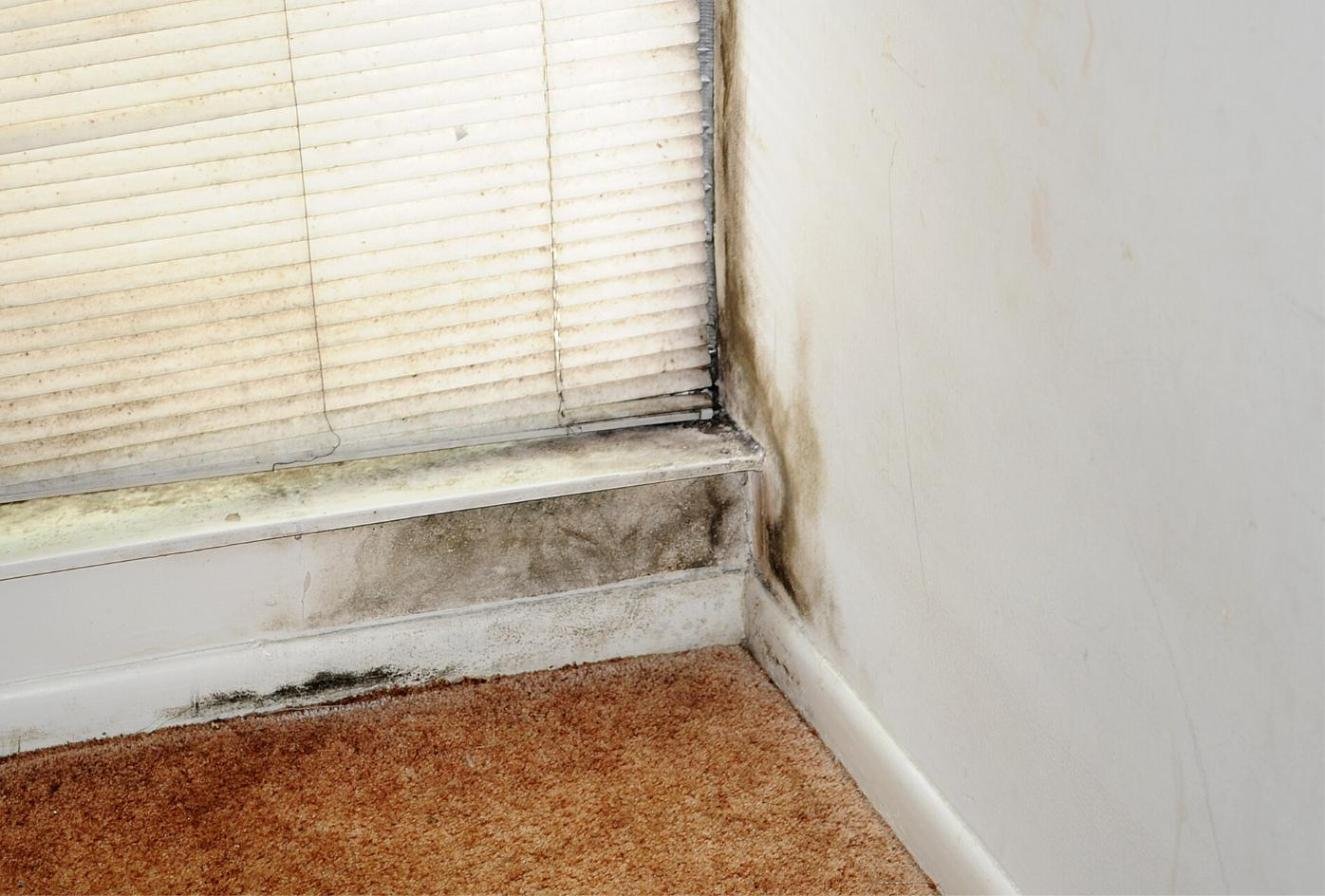
Mold behind the vapour barrier in a basement happens when moisture gets trapped between the concrete foundation and the plastic sheet. The fibreglass and wood studs in that space stay damp, and mold grows where you cannot see it. The fix is to remove the wet insulation, clean and dry the framing and concrete, and rebuild the wall so it can no longer trap water.
Why mold grows behind the vapour barrier in a basement
For decades the standard way to finish an Ontario basement was a wood stud wall against the foundation, fibreglass batts between the studs, a sheet of polyethylene over the batts and drywall on top. That design works above ground. Below ground it has a weakness.
A foundation wall is never fully dry. Concrete draws moisture from the soil and releases it slowly to the inside. With plastic on the room side, that moisture has nowhere to go. It collects in the batts and on the back of the poly.
Summer adds a second source. Humid air finds its way into the cavity through gaps at the top and bottom of the wall and around electrical boxes. It meets the cool concrete and condenses. Fibreglass does not feed mold, but the dust in it, the paper facing on some batts and the wood studs and bottom plate do. The bottom plate sits right on the slab, so it is often the wettest piece of wood in the house.
The builder's blanket in newer homes
Many newer homes around London have unfinished basements with a full-height fibreglass blanket fastened to the concrete and covered in a plastic or perforated facing. It is there to meet energy requirements at low cost. It has the same weakness. Moisture from the concrete, or a small leak at a window or tie hole, gets held against the wall behind the facing. Dark staining seen through the plastic, water beads on the inside of the facing or a sagging, heavy blanket are all reasons to look behind it.
Signs of mold behind basement insulation
- A musty smell that is strongest at electrical outlets or along the baseboard of an outside wall.
- Water droplets or fogging visible behind the plastic in an unfinished section.
- Dark or grey patches on the insulation seen through the poly.
- Rust on drywall screws or on the nails of the bottom plate.
- Staining, swelling or soft spots along the bottom of the drywall.
- Baseboard that has pulled away from the wall or swollen at the joints.
How to check without tearing the wall apart
In an unfinished basement, checking is easy. Cut a small flap in the plastic near the bottom of the wall, pull the batt forward and look at the back of the insulation, the concrete and the bottom plate. Tape the flap shut afterward.
In a finished basement, start with the least damage. Remove a cover plate from an outlet on an outside wall, with the breaker off, and smell and look into the cavity with a flashlight. A moisture meter on the bottom of the drywall and a thermal camera across the wall will show cool, damp sections without any cutting. If readings are high, a small inspection hole behind the baseboard line tells the rest of the story and is easy to hide later.
How the mold is removed
Once growth is confirmed, the wet and moldy materials come out. This is dusty, spore-heavy work, so the area is closed off with plastic and kept under negative air through HEPA filtration while it happens.
- Drywall on the affected wall is removed.
- The vapour barrier and insulation are bagged inside the work area and taken out. Wet or moldy fibreglass is not worth saving.
- Studs and plates are checked. Sound wood is cleaned. Rotted pieces, most often the bottom plate, are marked for replacement.
- The concrete is cleaned and the cavity is HEPA vacuumed.
- The wall is dried until the framing reads under 16% wood moisture content, with readings logged each day.
With the wall open you can finally see the concrete. Cracks, leaking tie holes and seepage at the floor joint that were hidden for years get found at this stage, and they should be repaired before anything is rebuilt.
Rebuilding so it does not come back
The rebuild is done by a contractor, and it is worth talking through the wall design with them before they start. Current building science favours putting a moisture-tolerant insulation directly against the concrete, such as rigid foam board with taped seams or closed-cell spray foam. That keeps humid room air off the cold wall and does not soak up water. A stud wall can go in front of it. With that approach, a separate sheet of poly is often left out so the wall can dry toward the room.
Insulation and vapour barrier rules are set by the Ontario Building Code, so your contractor or the local building department should confirm what your project needs.
If you are planning to finish a basement, watch the bare walls through a full spring and summer first. A wall that shows damp patches or salt deposits will do the same thing behind insulation, where it costs far more to find.
Common questions
Should a basement wall have a vapour barrier at all?
It depends on the wall design. Foam insulation against the concrete often does the job of a vapour control layer by itself. Your contractor or building department can confirm what the code requires for your wall.
Can moldy fibreglass insulation be cleaned and reused?
No. Fibreglass batts cannot be cleaned through their full thickness and lose insulating value once they have been wet. Replacement is cheap compared with opening the wall a second time.
Is condensation behind basement plastic normal in summer?
It is common, which is different from harmless. Regular moisture on the back of the plastic means the cavity is staying damp, and that is the condition mold needs.
Send photos, get a firm quote in 2 hours
Three photos from your phone is enough for most jobs. No obligation.